
VIP member
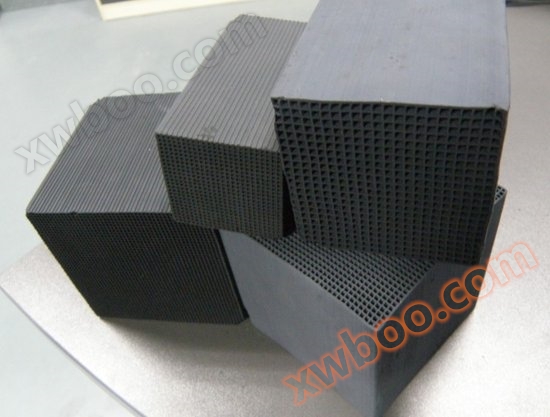
Honeycomb Activated Carbon - Essential for Waste Gas Treatment Engineering
Honeycomb Activated Carbon - Essential for Waste Gas Treatment Engineering
Product details
Honeycomb Activated Carbon - Essential for Waste Gas Treatment Engineering
Keywords: honeycomb activated carbon,Waste gas treatment equipmentEnvironmental protection equipment manufacturers
Technical parameters of honeycomb activated carbon:
The main component is coal based activated carbon with a normal compressive strength greater than 0.8 MPa. Common specifications include 50 * 50 * 100mm and 100 * 100 * 100mm. The usage temperature is less than 400 degrees Celsius, and the pore density is 100 pores/square inch. The empty tower wind speed is 0.8 meters/second, and the specific surface area is greater than 700 square meters/gram. The appearance of the product surface is flat and free of cracks. Note: Other specifications can be produced according to user requirements.
Honeycomb activated carbon, after undergoing water resistance treatment and secondary firing, has the characteristics of high strength, water resistance, strong acid resistance, and strong alkali resistance. It can be widely used in wastewater treatment, solvent recovery adsorption, and as a carrier for various catalysts.

Size and specifications can be customized
|
Test Item |
Test Method |
Index of indicators |
|
Product specifications |
\\ |
100*100*100 |
|
Iodine value mg/g |
GB/T 7702.7-2008 |
850 |
|
Specific surface area m2/g |
GB/T 7702.21-1997 |
920 |
|
Carbon tetrachloride adsorption rate% |
GB/T 7702.13-1997 |
55 |
|
Compressive strength MPa |
\\ |
0.9 |
|
水分% |
GB/T 7702.1-1997 |
8 |
|
Ash content% |
GB/T 7702.15-1997 |
15 |
|
square hole |
\\ |
150 |
|
Wall thickness mm |
\\ |
1.0 |
|
Volume density g/cm3 |
\\ |
0.35-0.6 |
|
Phenol adsorption rate% |
GB/T 7702.8-2008 |
≥ 45 |
|
Operating temperature ℃ |
\\ |
≤ 100 |
A good way to control air pollution is to use honeycomb activated carbon, which consists of two adsorbers connected in parallel. It can be used to treat intermittent exhaust and continuous exhaust, with one adsorber for adsorption and the other adsorber for desorption regeneration, catalyzing the combustion of desorbed pollutants and discharging them. When using honeycomb activated carbon, it is advisable to avoid high temperatures as they can reduce the adsorption capacity and decrease the adsorption effect with increasing temperature. At the same time, it is necessary to avoid high dust content in the gas, as tar dust mist can block the pores of activated carbon, increase wind resistance, and reduce adsorption efficiency. In this case, a dust filtration device should be installed in front of the honeycomb activated carbon to improve efficiency and service life.
Application of Honeycomb Activated Carbon: Workshop Cooling Equipment
Exhaust treatment of ventilation equipment used in public places such as food, chemical, industrial exhaust treatment, airports, shipyards, electronics industry, automobile factories, pharmaceuticals, medical, industrial buildings, large theaters, etc.
1. Suitable for the treatment of organic waste gas (triphenyl and toxic and harmful gases) from high air volume, low concentration factories. Suitable for indoor air purification and treatment of cooking fumes and exhaust gases. Air conditioners, refrigerators, copiers, etc. are used to remove odors. And it can be used as a catalyst carrier.
2. Used for gas-phase adsorption of activated carbon, adsorption and recovery of organic solvents such as benzene, toluene, xylene, acetone, oil and gas, CS2, etc.
3. Cigarette filters, decoration deodorization, indoor air purification (removal of harmful gases such as formaldehyde and benzene), purification of industrial gases (such as CO2, N2, etc.).
4. Production, natural gas purification, desulfurization, deodorization, and wastewater treatment in the petrochemical industry.
5. Air purification and deodorization in biochemical, paint industry, underground places, leather factories, and animal husbandry facilities.
6. Adsorption of odor from flue gas, adsorption of sulfides, removal of mercury vapor, and reduction of dioxin production.
Online inquiry
-
Contacts
-
Company
-
Telephone
-
Email
-
WeChat
-
Verification Code
-
Message Content
-